

.png)

.png)
.png)
.png)
.jpg)

.jpg)
AI is fundamentally changing the way we do science, from literature search and hypothesis generation to experiment execution and data evaluation. What must we do to super-scale science, and what will remain for us to do once we get there?
.png)
.jpg)
.png)
Recently, humanoid robots have been leaving their labs to work in factories, but what comes next? Domestic and socially intelligent robots may appear to be on the horizon, but the challenges they face in the real world are significantly more complex. This talk provides a deep dive into the technology behind these robots, tracing the evolution from large language models (LLMs) to state-of-the-art vision-language-action (VLA) systems. Highlighting how advances in embodied intelligence are beginning to bridge the gap between abstract reasoning and physical interaction, while critically examining the limitations of these systems and what it could truly take to bring intelligent machines into our everyday lives.
.png)
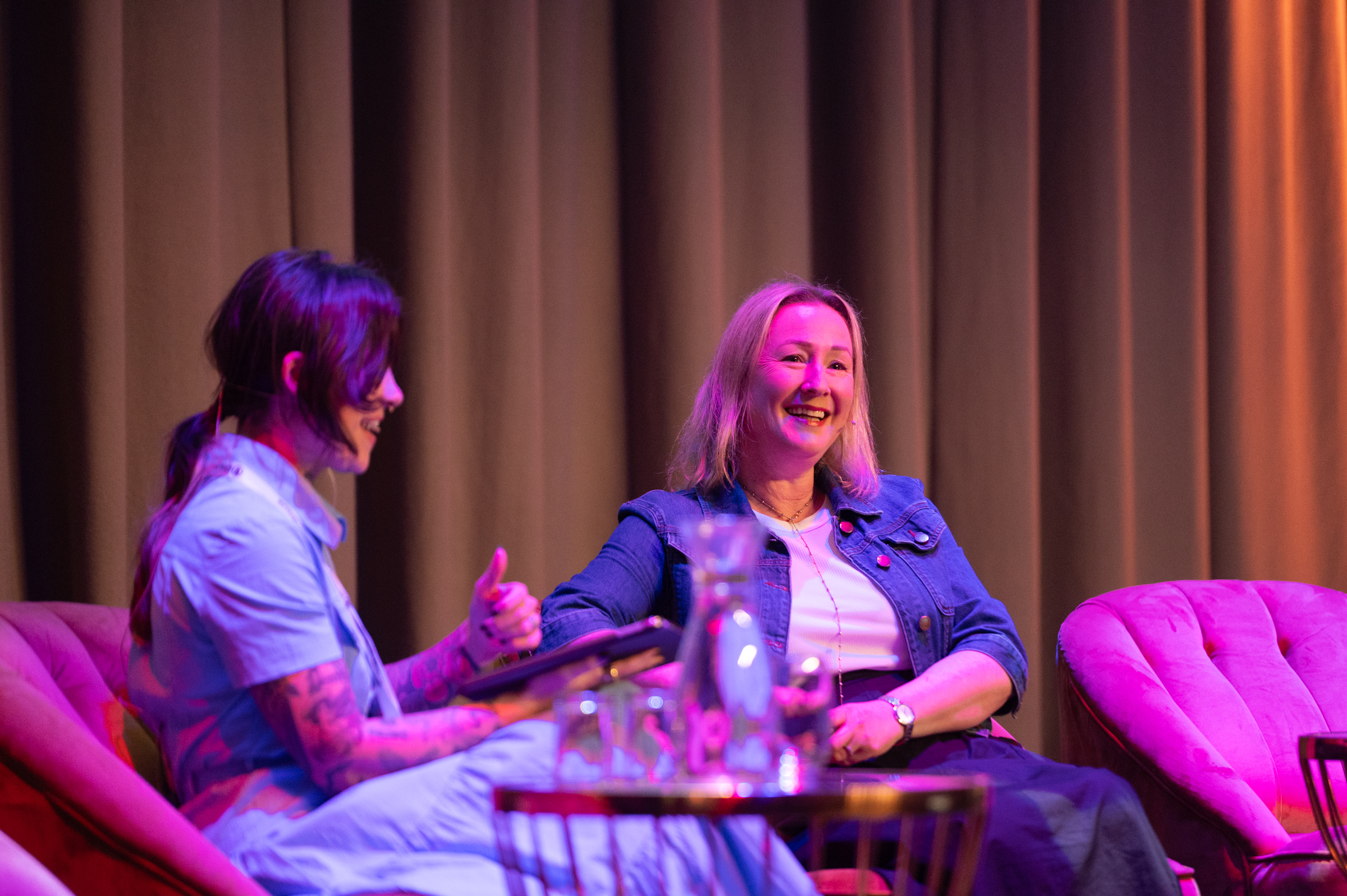
How is AI reshaping roles, skills and expectations - and what do individuals and organisations need to do to stay relevant?
.png)
.png)
.png)
.png)

.png)
As AI tools become embedded in how we work, write and solve problems, what impact is that having on how we think and learn?

.png)

.png)

.png)
The UK’s AI Minister stated this year that Britain will now become the home of global open source AI talent. This talk will give a deep dive into open source and and open infrastructure landscape in the UK and beyond, exploring the challenges and potential solutions.

.png)

Intelligent futures don't build themselves. They reflect the choices, values, and trade-offs we're making right now. In this keynote, Dr. Julia Stamm cuts through the AI hype to reframe what intelligent futures actually require: not just smarter systems, but human agency, clear judgement, genuine trust, and the courage to shape AI that serves people, not just profit.
.png)
AI has the potential to improve services, unlock innovation and help the public sector work more effectively. But delivering that in practice is far from straightforward. This session explores whether the public sector is truly ready to adopt and scale AI, the barriers that still exist, and how collaboration across public bodies, industry and academia can help make it happen. Where is progress being made - and what still needs to change?
.png)
.png)
.png)
.png)

Exploring how the people, data and decisions behind AI systems shape outcomes - and what’s at stake when they’re not representative.

.png)
.png)
.png)
.png)
An exploration of why so many AI projects stall at pilot stage - from weak strategy and poor data foundations to cultural resistance and integration challenges - and what it takes to scale successfully.

.png)

.png)

.png)
AI is reshaping how music, art, writing and design are created. This session explores how the creative industries are adapting, the opportunities around AI, and the challenges it raises around originality, ownership and the role of human talent.
.png)
.png)
.png)
.png)
The age of AI will be transformational for individuals, organisations and communities. In this keynote, Dex Hunter-Torricke, a two-decade veteran of the global tech industry - who has worked at the highest levels alongside Elon Musk, Mark Zuckerberg, Eric Schmidt and others - will explore a different model for leadership emerging now for the next chapter of our century. The leaders who thrive in the coming decades will be systems thinkers in a world of siloed institutions, coalition builders in an era of fracture and those who can connect cutting-edge tools with a compelling human story and theory of change for the world around us.
.png)
.png)
As AI systems become more sophisticated, questions about whether they could one day have feelings, experiences, and welfare worthy of moral consideration are becoming harder to ignore. Experts are divided — and however the science settles, a growing number of people will come to believe that they do. Those perceptions alone could have profound implications for society and policy. This talk explores what's at stake on both sides: the risks of dismissing machine consciousness prematurely, and the dangers of misattributing it.
.png)
.png)
AI’s rapid growth is driving huge demand for data centres, energy and digital infrastructure. As Scotland and the UK look to position themselves through AI growth zones and investment, what role can it play in powering this next wave? This session explores the opportunity, the realities of data sovereignty, and the sustainability challenges behind the AI boom - separating hype from what’s actually happening on the ground.
.png)
.png)
As AI advances at unprecedented speed, it is increasingly framed as a breakthrough capable of solving humanity’s most enduring challenges, including global poverty. If AI is as powerful as its advocates claim, then the persistence of global poverty should already be an anomaly. Instead, progress remains uneven, fragmented, and fragile. Breakthroughs coexist with a landscape of stalled pilots and unmet expectations. Why, despite unprecedented investment and attention, has AI done so little to engender global change? This keynote will explore three competing visions of how AI might address poverty - from targeted applications to superintelligence and post-scarcity abundance.
.png)
One of the most influential internet pioneers of our time, Jimmy Wales joins us for an exclusive fireside chat on trust, truth and the future of information in the AI era. As the founder of Wikipedia, Jimmy helped build one of the world’s most widely used and trusted platforms - showing how openness, collaboration and shared standards can create knowledge at global scale.
At a time when AI-generated content, disinformation and declining trust are reshaping the digital landscape, this conversation will explore how truth and trust can be protected, and what today’s technology leaders can learn from Wikipedia’s remarkable story.
.png)




© 2025 The Data Lab


